
Air Drilling vs. Conventional Mud: Choosing the Right Circulation System
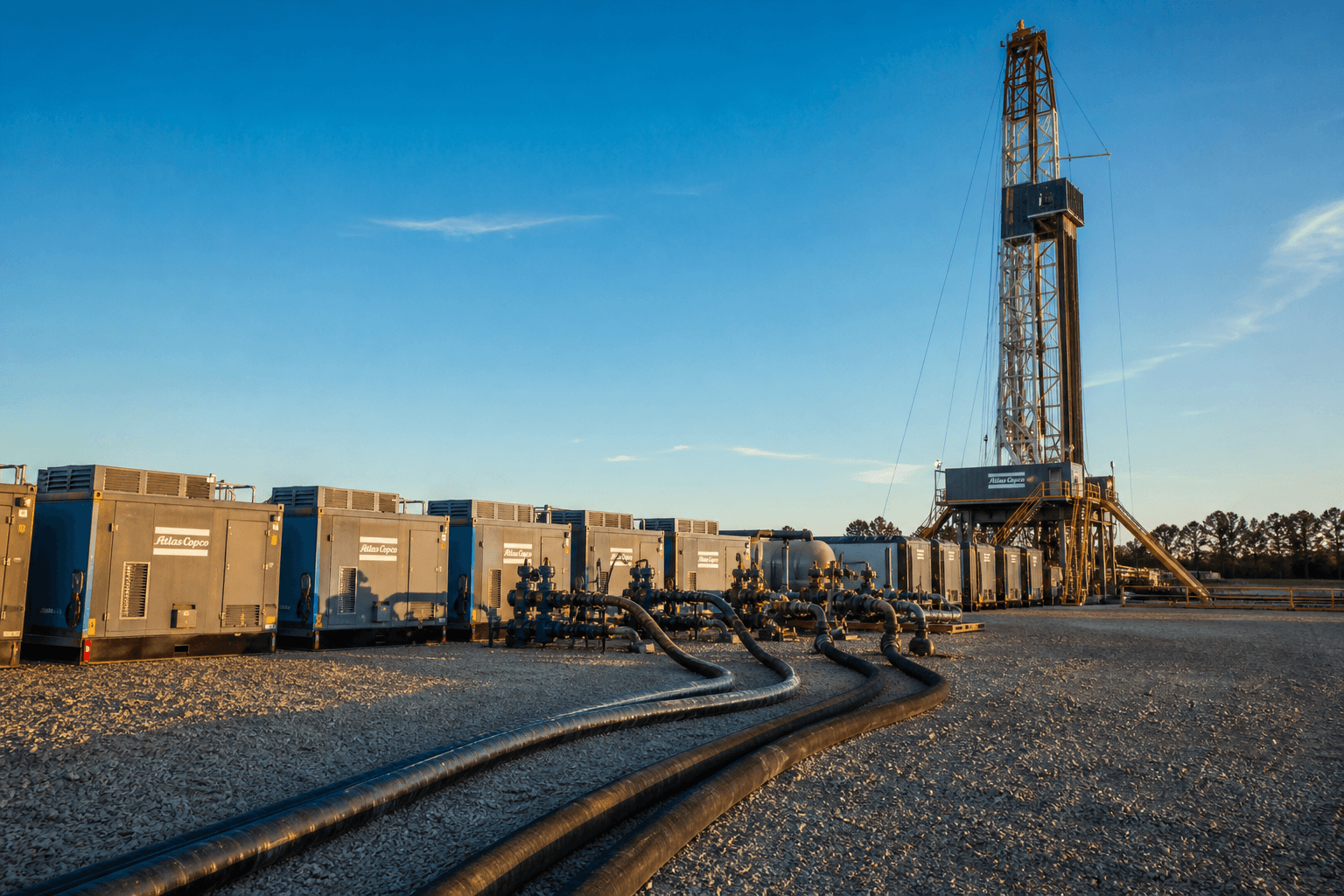
Every well needs a circulating medium to cool the bit, clean the hole and control pressure. The conventional choice is drilling mud, but in the right conditions compressed air — or mist, foam and aerated fluid — can deliver step-changes in performance that mud simply cannot match.
The case for air
Air is far lighter than mud, so it imposes very little hydrostatic pressure on the formation. In hard rock that translates into much higher rates of penetration and longer bit life. In depleted or low-pressure reservoirs it avoids the over-balance that pushes mud and solids into the pay zone, preserving productivity. And in severe lost-circulation ground, where mud simply disappears, air keeps the hole clean when nothing else will.
When mud still wins
- Wells with significant water inflow that loads up the annulus
- Unstable shales that need the wall support a liquid column provides
- High-pressure zones where well control requires hydrostatic weight
- Formations prone to balling or that demand precise rheology control
The middle ground: mist, foam and aerated fluids
Most wells are not purely 'air' or purely 'mud'. Adding water and a foaming agent creates mist or stable foam that lifts cuttings and tolerates modest water inflows while keeping bottom-hole pressure low. Aerated fluid — mud or water injected with air or nitrogen — lets you dial the effective density up or down as the well demands. The art is selecting and switching between these systems as conditions change downhole, which is the heart of what an air-drilling specialist brings to a project.