Why Nitrogen Matters in Air and Underbalanced Drilling
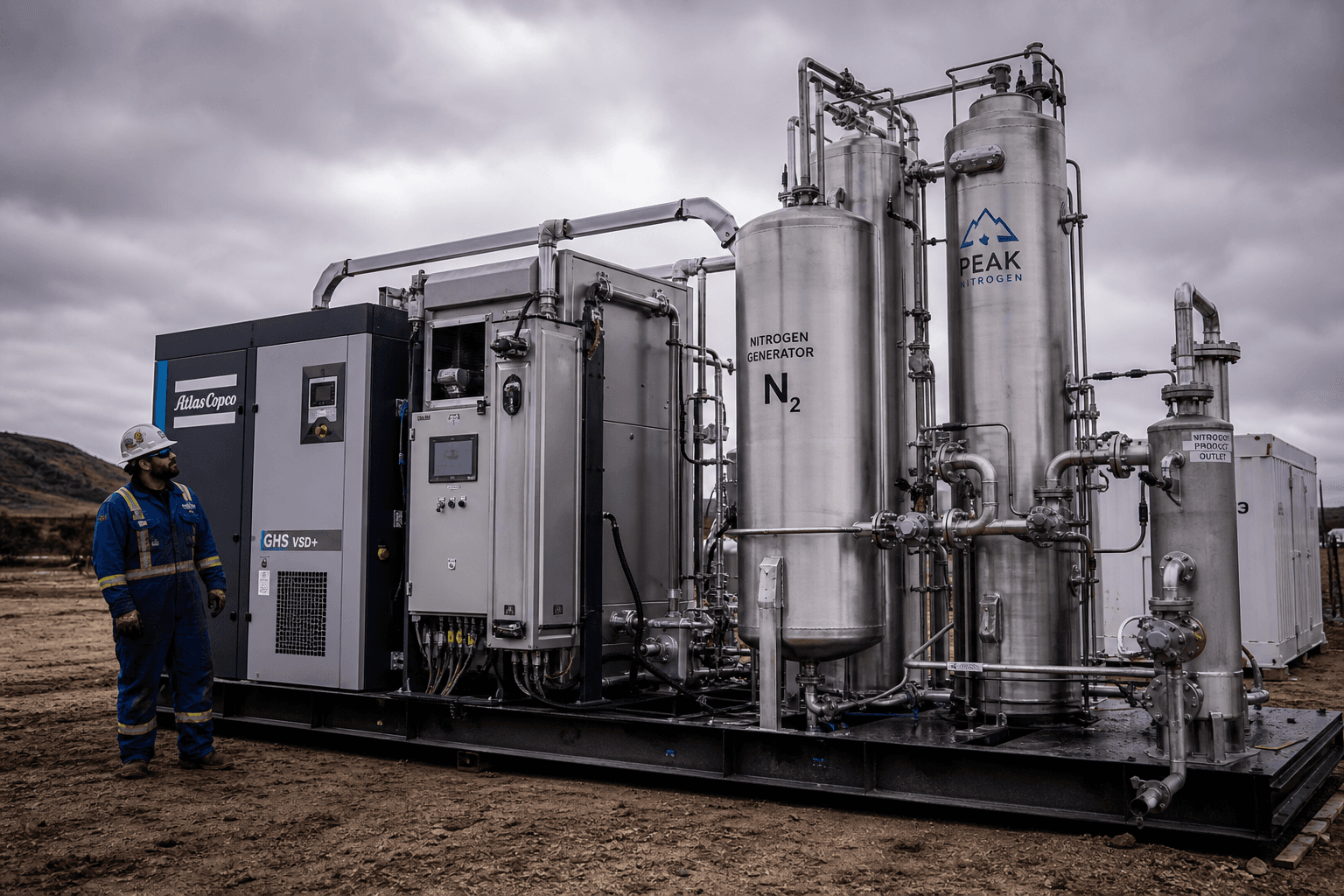
Compressed air is cheap and effective — until it meets hydrocarbons. Air carries roughly 21% oxygen, and downhole that oxygen can combine with gas or oil to create a combustible mixture and the risk of a downhole fire. Nitrogen solves the problem by replacing that oxygen with an inert gas.
Generated on site from compressed air
Our membrane nitrogen units take compressed air from the same kind of compressors used for air drilling and pass it through selective membranes that strip out oxygen, leaving a high-purity nitrogen stream. Because the nitrogen is produced on location and on demand, there is no dependence on trucking and storing liquid nitrogen — a major advantage on remote sites. Boosters then raise the nitrogen to the pressure the well requires.
Where nitrogen earns its keep
- Underbalanced drilling in oil and gas zones, where pure air is unsafe
- Displacing and unloading wells to bring them on production
- Purging lines and vessels of oxygen before and after operations
- Pressure testing and general well clean-up
Safety as a system
Nitrogen is not a bolt-on; it is part of an integrated package of compressors, boosters, after coolers and monitoring that has to be sized and run together. Getting that balance right is what makes underbalanced drilling in live reservoirs both safe and productive.